
Our Work
The Collaborative for Racial Justice is a forum for critical reflection, exchange and research collaboration on racial justice. Members of the Collaborative tackle pressing social, political, and legal issues to seek solutions to racial injustice and to imagine alternative futures in which the world is remade.

Spectres of Law
In December 2022, members of the Collaborative for Racial Justice (CRJ) visited the career retrospective of Trinidadian-Canadian artist, Denyse Thomasos (1964-2012), at the Art Gallery of Ontario. The exhibit’s focal point was the towering, large-scale, acrylic paintings that abstractly represent scenes such as the industrial port, the city centre, and the slave ship in angular, broad strokes. The work reveals the contours of structural and racial violence that construct the landscapes we inhabit daily, however, the subjects who are made and unmade through these spaces are absent from the images. Instead, her work represents paradoxical spaces that are simultaneously ghost towns and bustling cities; crowded and abandoned slave ships. There is a spectral presence in the work where the figure is absent yet overwhelmingly haunts the landscape.
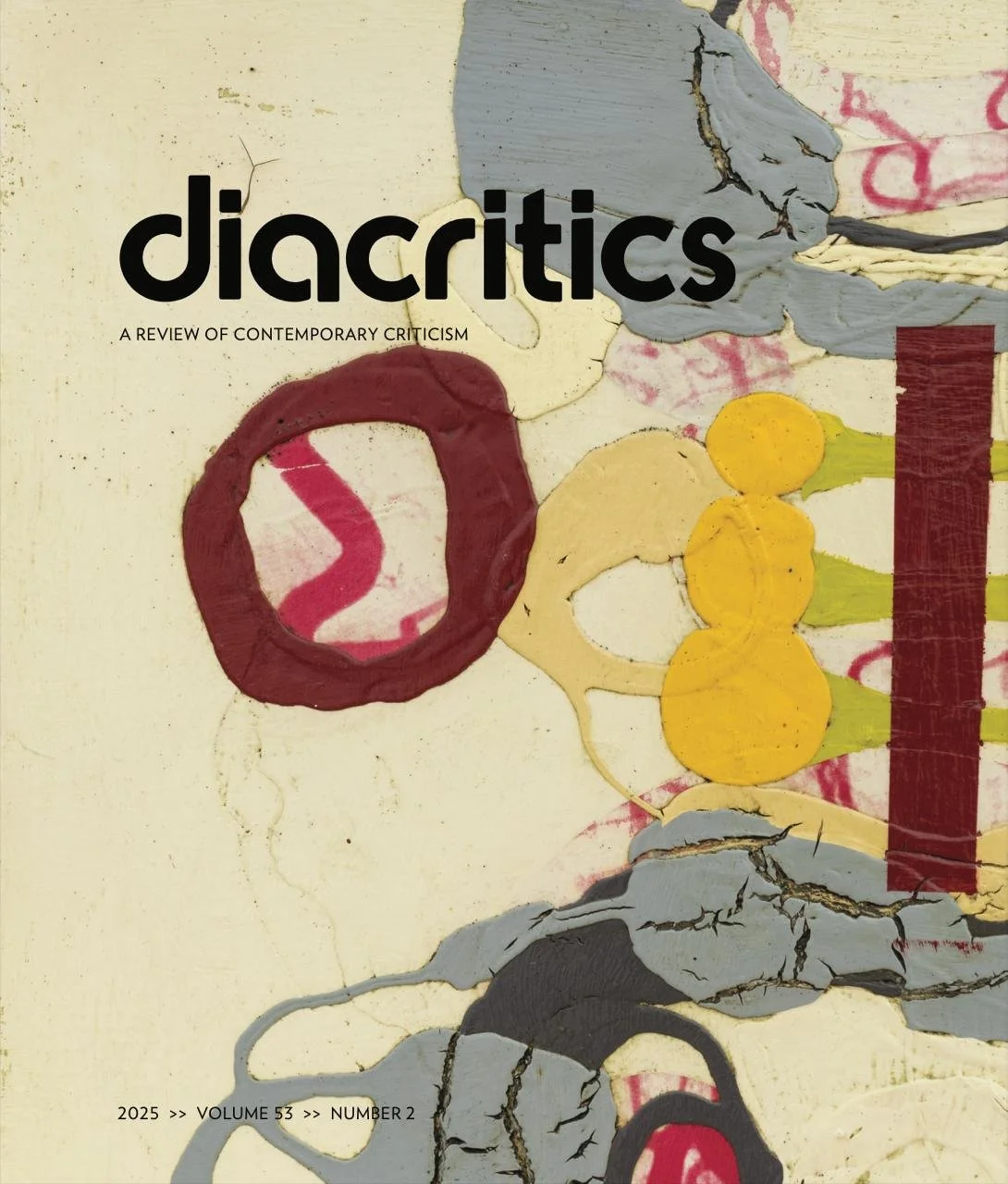
Publication: “Phobic Pessimism, Philic Feminism” by Patrick Teed
Research fellow Patrick Michael Teed has a new essay out in Diacritics, offering a close reading of Iyko Day's "Afro-Feminism Before Afropessimism" to reexamine the presumed antagonism between Afropessimism and Black feminism.
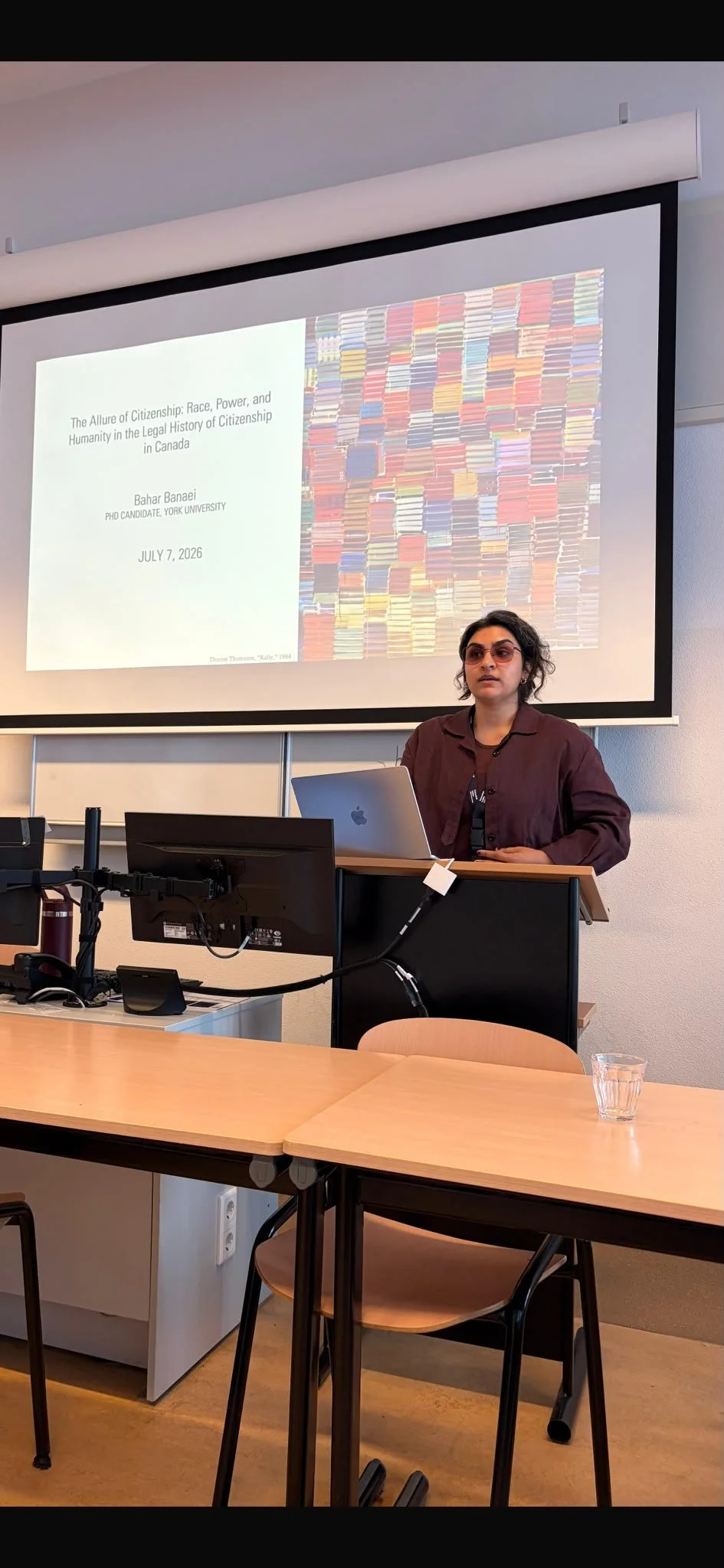
Bahar Banaei’s research receives the St. George's Society of Toronto Endowment for Graduate Student Award (2026-2027).
Bahar conducts historical, race critical, and socio-legal research that attends to the intimacies between the British Empire and Canada between the late 19th century and early 20th century. She focuses on the period between the Canadian Confederation (1867) and the establishment of Canada's first Citizenship Act (1947) to trace how the concept of 'citizenship' was conceptualized in relation to racialized migration from the United States at the time of the emerging nation-state of Canada.

CRJ Writing Retreat
During the week of October 21-25, members of the Collaborative for Racial Justice convened in a cabin located in the Greater Nappanee region for the first CRJ writing retreat and workshop. During this retreat, junior scholars from three programs across York University convened to work on projects related to the topics of race, law, and culture. Writing projects included dissertation chapters and articles for publication.

“Freedom is never free: A convoy to radicalization,” Connor MacMillan’s research receives SSHRC and PCH-SSHRC award.
Connor’s doctoral work is focused on the rise of far-right extremism within Canada. Canada’s reputation for multicultural values, this nation is not immune to far-right extremist movements. Canada is currently experiencing a rapid increase in the social and political presence and activism of far-right extremists. Connor’s work will examine the key factors that foster the far-right radicalization of groups, individuals, and their movements.

The Racial Carcerality of Migration Governance
Bringing migration governance literature into conversation with carceral studies, this article offers a conceptual framework to account for the interconnectedness between migration governance in the global North and the racial logics of carcerality. It argues that criminalization, incarceration, detention, and deportation, converging as a carceral industrial complex, should be viewed in historically specific contexts as modes of racist exclusion that fulfill racial projects.

Supporting Youth With Incarcerated Family - YouthREX
This webinar was hosted by YouthREX.
Young people with incarcerated family are often invisible or ignored, but the very real impacts of the criminal justice system on their lives – and the stigma they experience – affect their wellbeing, their sense of self and belonging, and their future aspirations.

The Symbiotic Harms of Immigration Detention and Deportation as Experienced by Families in Canada
Canadian immigration detention is used to control migration and to facilitate the removal, deportation and exclusion of unwanted and illegalized migrants. While the Canadian government has advanced efforts to create alternatives to immigration detention, it is also building new detention centers, maintaining the use of provincial prisons, and continuing to sanction migrants to indefinite detention.


Prison Education Programs and Their Impact on Recidivism in Canada
What types of education programs are available to prisoners in Canada? What are some of the critiques of these programs? What can we learn from the education policies and programs available to prisoners in the United States?